Related Articles



Nigeria Travel Ban: What the US Policy Expansion Means
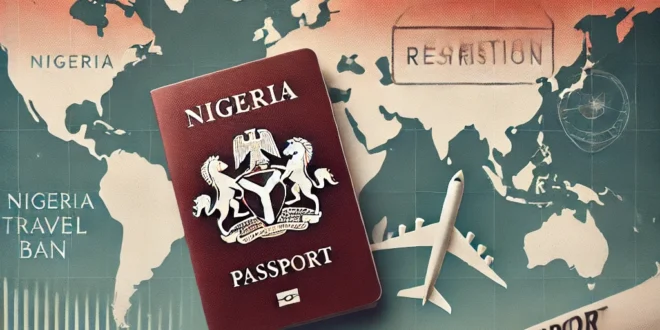
The term **“Nigeria travel ban”** in 2025 refers to the inclusion of Nigeria on a list of countries subject to travel restrictions imposed by the United States government under a broader expansion of its international travel ban policy. Rather than a complete prohibition on all Nigerian citizens entering the US, the current policy places **partial restrictions on visa categories** for Nigerian travelers as part of a group of 39 countries facing new limits on entry. :contentReference[oaicite:1]{index=1}
This development has raised questions among students, business travelers, families, and immigration advocates about how travel between the two countries may be affected. To understand the implications fully, it’s important to explore the context of the travel ban, what partial restrictions mean, why Nigeria was included, and what exceptions may still apply.
Background: US Travel Ban Expansion in 2025
In **December 2025**, the United States under President Donald Trump announced a significant expansion of its travel ban policy, increasing the number of countries subject to either full or partial entry restrictions from 19 to **39 nations**. :contentReference[oaicite:2]{index=2}
This move follows an earlier travel ban introduced in June 2025. The expanded proclamation took effect on **January 1, 2026**, and suspends or limits visa issuance for nationals of multiple countries, citing national security, vetting deficiencies, and concerns over data sharing between governments. :contentReference[oaicite:3]{index=3}
Unlike full bans — where citizens from certain countries are barred from entering the US under most visa categories — **partial bans** mean that some types of visas (especially temporary visitor, student, and exchange visas like B-1/B-2, F, M, and J) are suspended, while others might still be possible under stricter conditions. :contentReference[oaicite:4]{index=4}
Where Nigeria Fits in the Travel Ban
Under the expanded travel ban, **Nigeria is included among the 39 countries subject to partial travel restrictions**. This means that certain types of nonimmigrant and immigrant visas for Nigerians are either suspended or subjected to heightened limitation categories as defined by the US Department of State and Department of Homeland Security. :contentReference[oaicite:5]{index=5}
Nigeria was not placed under a **full travel ban** (which would completely bar entry for citizens regardless of visa or purpose of travel), but its inclusion on the partial-restriction list significantly affects the ease with which Nigerians can obtain certain visas to visit, study, work, or travel to the US. :contentReference[oaicite:6]{index=6}
The administration emphasized that because of concerns related to vetting capabilities, documentation systems, and information sharing with the United States, travel authorities felt compelled to extend restrictions to more countries — including Nigeria — along with many others, most of which are in Africa. :contentReference[oaicite:7]{index=7}
Why Nigeria Was Included: Administration Rationale
The primary rationale given by the US government for expanding travel restrictions to include nations like Nigeria revolves around **national security and immigration control concerns**. Officials argue that countries on the list lack reliable systems for screening travelers, sharing information with US authorities, and verifying travel documents to the satisfaction of US standards. :contentReference[oaicite:8]{index=8}
Nigeria, as the most populous country in Africa and a significant source of international students and business travelers, was highlighted in internal discussions and reporting as a potential candidate for restrictions if compliance with vetting benchmarks was not demonstrated. :contentReference[oaicite:9]{index=9}
Critics of the policy contend that many of these criteria are subjective or overly broad and that Nigeria’s inclusion may disproportionately affect innocent travelers, while supporters of the policy argue that rigorous vetting is essential to homeland security.
Types of Travel Affected by the Ban
Under the partial travel restrictions affecting Nigeria, the following categories of travel are most typically impacted:
Visitor and Tourist Travel (B-1/B-2)
Nationals from Nigeria may face additional hurdles or outright suspension of **visitor visas**, which are normally used for tourism, visiting family, or short-term business travel. This means that Nigerian citizens may only obtain limited visitor entry (if at all) until further notice or improvements in documentation systems. :contentReference[oaicite:10]{index=10}
Student and Exchange Travel (F, M, J Visas)
Student visas for Nigerians — such as F (academic), M (vocational), and J (exchange visitor) categories — are also affected by the partial restrictions. This may limit the ability of Nigerian students to study in the US without securing alternative or exceptional permissions. :contentReference[oaicite:11]{index=11}
Immigrant Visas and Longer-Term Travel
The partial ban also affects some immigrant visa categories, particularly those requiring temporary presence in the US. Nationals traveling for work, relocation, or family reunification may see delays or suspensions under affected classifications. :contentReference[oaicite:12]{index=12}
Exceptions and Who Is Still Allowed Entry
Despite the restrictions, several **exceptions remain in place** for Nigerians and other affected nationals under the travel ban proclamation: :contentReference[oaicite:13]{index=13}
- Valid existing visas: Individuals with visas issued before the ban’s effective date (January 1, 2026) can still enter the US as long as their visa remains valid. :contentReference[oaicite:14]{index=14}
- Lawful permanent residents: Green card holders from Nigeria are generally exempt from the ban. :contentReference[oaicite:15]{index=15}
- Athletes and officials: Certain temporary exemptions exist for participants in major international events. :contentReference[oaicite:16]{index=16}
- Diplomats and special visa holders: Diplomatic, official, and some designated work visas are often not subject to the travel ban. :contentReference[oaicite:17]{index=17}
However, some exemptions that previously existed — such as family-based immigration paths — have been narrowed or removed, affecting how and when Nigerians can reunite with relatives in the US. :contentReference[oaicite:18]{index=18}
—
Reactions and Debate Around the Nigeria Restriction
The inclusion of Nigeria in the travel restrictions has sparked a range of reactions. Supporters of the travel ban argue that the US has a sovereign responsibility to ensure secure borders and thoroughly vetted travel. Opponents, including advocacy and human rights organizations, contend that broad nationality-based restrictions are unfair and harmful to families, students, and economic ties. :contentReference[oaicite:19]{index=19}
Some critics also note that because many African nationals, including Nigerians, travel legally, work, and study abroad without security incidents, blanket or partial bans may not be the most effective or equitable policy approach. :contentReference[oaicite:20]{index=20}
Final Thoughts
The **Nigeria travel ban** in 2025 reflects broader changes in US travel and immigration policy, as the government seeks to tighten entry requirements and vetting processes. Nigeria’s inclusion among the 39 countries with partial restrictions underscores the complexity of balancing national security with global mobility and personal freedoms. :contentReference[oaicite:21]{index=21}
For Nigerian students, families, and international travelers, the policy means increased uncertainty and additional planning, while exceptions still exist for those with valid visas or specific statuses. As legal challenges, diplomatic discussions, and policy reviews continue, Nigerians and other affected nationals should stay informed through official government channels and immigration advisors. :contentReference[oaicite:22]{index=22}