Related Articles



39 Countries Travel Ban: What It Means, Why It Happens, and Who Is Affected
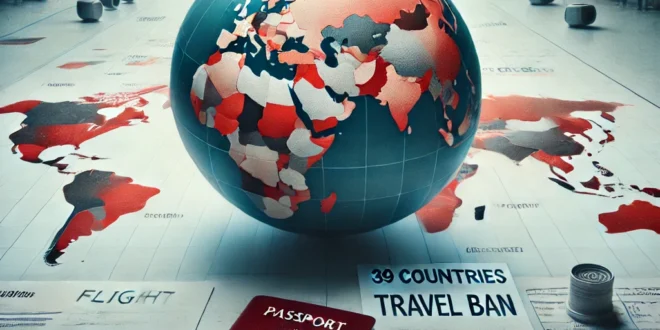
The term “39 countries travel ban” refers to reports and discussions surrounding large-scale government restrictions that limit or prohibit entry from dozens of countries at once. Such travel bans are typically introduced for reasons related to national security, immigration control, public health, or foreign policy, and they can significantly affect travelers, businesses, families, and international relations.
When a travel ban involves a high number of countries, its impact extends far beyond tourism. It influences global mobility, international trade, education, diplomacy, and personal freedom, making it a topic of widespread concern and debate.
What Is a Multi-Country Travel Ban?
A multi-country travel ban is a government policy that restricts or prohibits entry from a list of countries rather than targeting a single nation. These bans may apply to tourists, students, workers, immigrants, or specific visa categories.
In some cases, the restrictions are partial, allowing certain travelers such as diplomats or permanent residents to enter. In other situations, the ban may be broad, suspending most or all entry from the listed countries.
Why Governments Impose Large Travel Bans
Travel bans involving dozens of countries are usually justified by governments as necessary measures to protect national interests. While controversial, these policies are often presented as preventive actions.
National Security Concerns
One of the most commonly cited reasons for large travel bans is national security. Governments may argue that inadequate identity verification systems, conflict zones, or lack of information-sharing in certain countries pose security risks.
Immigration and Border Control
Travel bans may also be used as tools to manage migration flows. By restricting entry from specific regions, governments attempt to reduce irregular immigration or control asylum applications.
Public Health Emergencies
During global health crises, travel bans can be implemented to limit the spread of infectious diseases. These bans are often temporary but may involve many countries if an outbreak is widespread.
What Does “39 Countries” Typically Mean?
When discussions reference a travel ban affecting 39 countries, it usually indicates a broad policy under consideration or implementation that spans multiple regions. Such a number suggests a global or near-global scope rather than a region-specific restriction.
These lists are often subject to change, with countries added or removed based on diplomatic relations, compliance with security standards, or improvements in documentation systems.
Who Is Most Affected by a Large Travel Ban?
A travel ban involving many countries affects far more than tourists. The human and economic impact can be extensive.
Tourists and Business Travelers
Tourism-dependent industries such as airlines, hotels, and tour operators often suffer immediate losses. Business travelers may face delays, canceled deals, or increased costs due to rerouted travel.
Students and Academic Institutions
Students from affected countries may be unable to attend classes, participate in research, or return to their universities. Educational institutions also experience reduced enrollment and cultural exchange.
Families and Immigrants
One of the most emotional consequences of travel bans is family separation. Spouses, parents, and children may be unable to reunite due to visa suspensions or entry restrictions.
Economic and Global Impact
Large-scale travel bans can disrupt global supply chains, labor markets, and international investment. Countries reliant on foreign workers or international trade often feel secondary effects even if they are not directly listed.
Airlines, logistics companies, and multinational corporations must adjust operations, often resulting in higher costs and reduced efficiency.
Legal Challenges and Public Debate
Travel bans involving many countries frequently face legal scrutiny. Critics argue that such policies may be discriminatory, overly broad, or inconsistent with international agreements.
Supporters, on the other hand, argue that governments have the sovereign right to control borders and prioritize national security. Courts often play a role in determining whether bans are lawful or require modification.
How Travelers Can Respond
Travelers affected by large travel bans should stay informed through official government sources, airlines, and embassies. Policies can change quickly, and exemptions may apply in certain situations.
Seeking legal or immigration advice can help individuals understand options such as waivers, alternative visas, or future eligibility once restrictions are lifted.
Final Thoughts
A “39 countries travel ban” represents a significant and far-reaching policy decision with global consequences. While governments may implement such measures for security, health, or immigration control, the human, economic, and diplomatic impacts are substantial.
Understanding how large-scale travel bans work, who they affect, and why they are introduced helps travelers, businesses, and families prepare for uncertainty and navigate an increasingly complex global travel landscape.